7449 East Osborn Road #4 Scottsdale, Arizona 85251

Have you ever found yourself looking in the mirror and focusing a little too much on that one chipped tooth or the gap where a molar used to be? If so, you’re certainly not alone. Whether it’s from a rogue popcorn kernel or years of wear and tear, dental damage happens to the best of us. But here is the good news: modern dentistry has turned “fixing a smile” into a literal art form.
Today, the two heavy hitters in restorative care are dental crowns and dental implants. But how do you choose? Is it better to “cap” what you have or start fresh with a permanent replacement? Let’s dive into the data, the costs, and the clinical outcomes to help you decide which path leads to your best smile yet.
The State of American Smiles in 2026
Before we compare the treatments, it’s helpful to see just how common these issues are. Tooth loss isn’t just a “senior” problem. According to the Centers for Disease Control and Prevention (CDC), approximately 50% of U.S. adults aged 20 to 64 have lost at least one permanent tooth.
As our population ages and aesthetic standards rise, the demand for high-quality restorations is skyrocketing. Projections for 2026 suggest that the U.S. cosmetic dentistry market will reach nearly $20 billion, with dental implants becoming the “gold standard” for those looking for a permanent fix.
Dental Crowns: The “Shield” for Your Natural Teeth
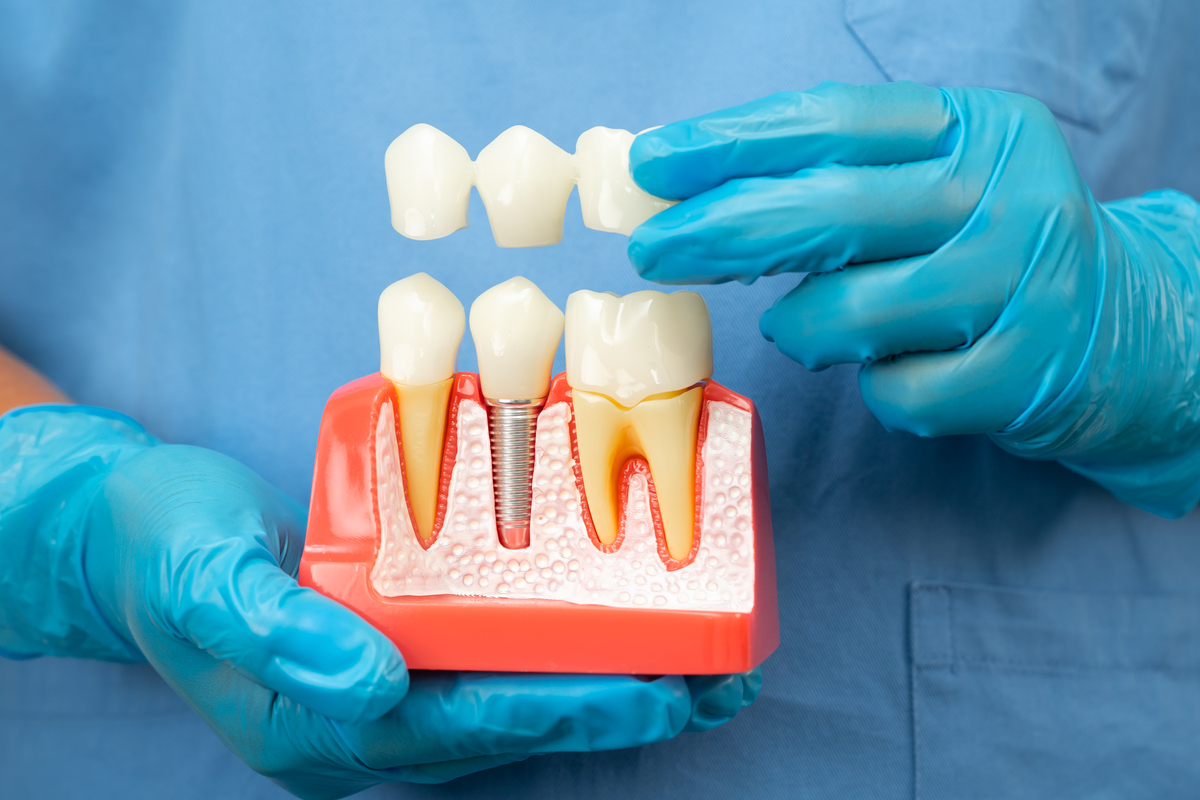
A dental crown is essentially a custom-made “cap” that covers the entire visible portion of a damaged tooth.
When is a Crown the Best Choice?
Dentists typically recommend crowns when the natural tooth root is still healthy, but the crown is compromised. This includes:
- Large cavities that a filling can’t fix.
- Cracked or weakened teeth.
- Teeth that have undergone a root canal.
The Success and Durability of Crowns
Crowns are a tried-and-true solution. Recent data from the American College of Prosthodontists (ACP) indicates that with proper care:
- Porcelain-fused-to-metal (PFM) and Ceramic crowns typically last 10–15 years.
- Zirconia crowns (a favorite in 2026 for their strength) can last 15–20 years.
- Gold crowns remain the durability kings, often lasting 20+ years, though they are less popular for front-teeth aesthetics.
Dental Implants: The “Root” of the Solution
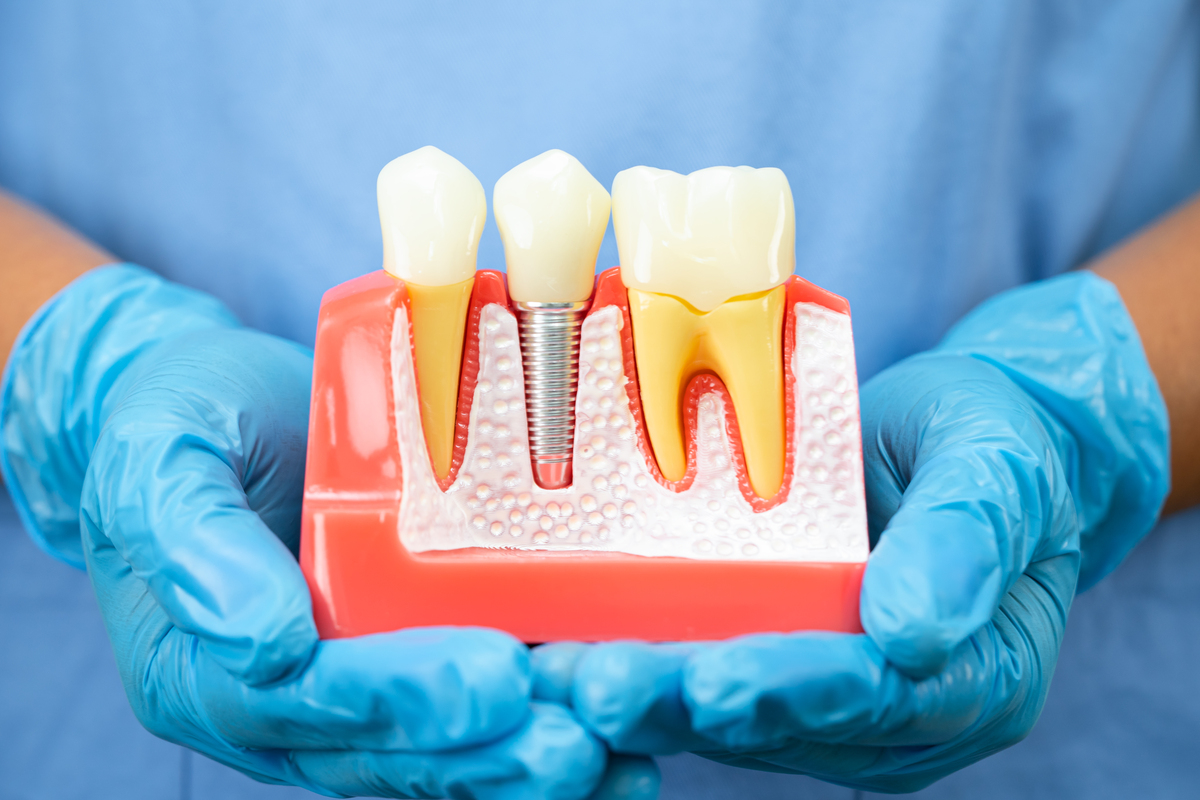
Unlike a crown, which sits on top of a tooth, a dental implant replaces the entire tooth, including the root. It involves a titanium post surgically placed into the jawbone, which then fuses with the bone in a process called osseointegration.
Why Implants are Trending in 2026
By 2026, the number of Americans with at least one dental implant is expected to exceed 3 million, with roughly 500,000 new implants placed annually.
The primary draw? Bone preservation. Unlike bridges or crowns on weak teeth, implants stimulate the jawbone, preventing the bone loss that naturally occurs when a tooth is missing.
The Stats on Success
If you’re worried about surgery “taking,” the numbers are on your side. Clinical datasets published in 2026 show that dental implants have a staggering 97.83% success rate. Even after 20 years, survival rates remain above 90%, making them the longest-lasting medical implants used in the human body today.
Procedure & Recovery Time
Crowns: Quick and Convenient
- Usually completed in 2 visits
- Minimal discomfort
- Back to normal eating within days
Implants: A Longer Journey
- Surgical placement required
- Healing (osseointegration) can take weeks to months
- May require bone grafting in some cases
If you want a fast solution, crowns win.
If you want a permanent solution, implants are worth the wait.
Pros and Cons
Dental Crowns
Pros
- Less invasive
- Lower cost
- Faster treatment
Cons
- Doesn’t replace missing teeth
- May weaken over time
- Needs replacement every 10–15 years
Dental Implants
Pros
- Long-lasting (20+ years)
- Prevents bone loss
- Feels and functions like natural teeth
Cons
- Higher upfront cost
- Requires surgery
- Longer healing period
Oral Health Impact: Why It Matters
Dental implants do more than replace a tooth—they protect your long-term oral health.
- Implants stimulate the jawbone, preventing bone loss
- Crowns rely on existing tooth structure and don’t prevent bone shrinkage
- Over time, missing teeth can cause facial sagging and shifting teeth
This is why dentists often recommend implants for missing teeth whenever possible.
When Should You Choose a Crown vs. an Implant?
Choose a Dental Crown If:
- Your natural tooth is still intact
- You’ve had a root canal
- You want a quicker, more affordable fix
Choose a Dental Implant If:
- Your tooth is missing or severely damaged
- You want a long-term solution
- You have healthy gums and sufficient bone
Which Option Is Better for Your Smile?
Here’s the honest answer:
- If your tooth can be saved → Go with a crown
- If your tooth is missing, → Implant is the gold standard
Generally, local qualified Scottsdale dentists recommend preserving natural teeth first, but when that’s not possible, implants offer the best long-term results.
Conclusion
Ultimately, the “better” option depends on the health of your existing tooth.
- Choose a Crown if your tooth is still there and the root is healthy. It’s faster, less invasive, and more affordable in the short term.
- Choose an Implant if your tooth is missing, failing, or severely decayed. It offers a permanent, “set-it-and-forget-it” solution that protects your jawbone and surrounding teeth.
Consulting with a local dental professional is the only way to get a personalized roadmap. With the technology available in 2026—from 3D imaging to CAD/CAM same-day crowns—restoring your smile has never been more predictable or successful.
Frequently Asked Questions
1. Are dental implants better than crowns?
Yes, for missing teeth. Implants last longer and prevent bone loss, while crowns are better for repairing existing teeth.
2. How long do dental implants last?
With proper care, implants can last 20–25 years or more.
3. Do dental crowns hurt?
The procedure is usually painless with local anesthesia, and discomfort is minimal afterward.
4. Are dental implants worth the cost?
Yes. Although expensive up front, their durability often makes them more cost-effective in the long term.
5. Can a crown be replaced with an implant later?
Yes. If a crowned tooth fails, it can often be extracted and replaced with an implant.