7449 East Osborn Road #4 Scottsdale, Arizona 85251
If you’re preparing for dental implants in Scottsdale, you’ve probably heard your dentist mention “implant restoration” at some point during your treatment planning — and it’s easy to assume it just means the same thing as the implant itself. It doesn’t, and understanding the difference actually helps a lot when it comes to knowing what to expect from start to finish.
As trusted Dentists in Scottsdale AZ, we walk patients through this exact distinction every week, so let’s break down what implant restoration really means and why it’s such an important final step in the process.
Implant vs. Implant Restoration: What’s the Difference?
It’s a common mix-up, but the two terms actually refer to two separate parts of the same treatment:
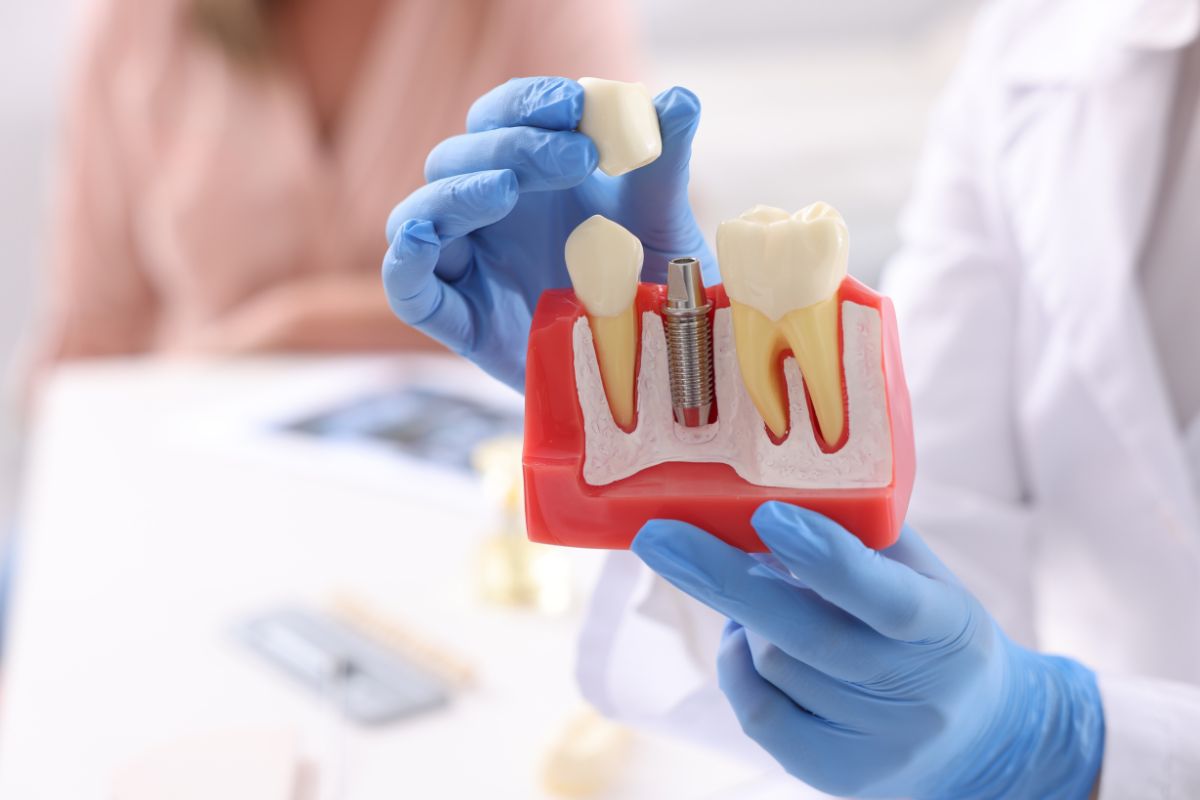
- The implant is the small titanium post that’s surgically placed into your jawbone. It acts as an artificial tooth root, and over the following months, it fuses with the surrounding bone through a process called osseointegration.
- The implant restoration is the visible part — the crown, bridge, or denture that gets attached to the top of the implant once it has fully healed. This is the piece that actually looks and functions like a tooth.
In other words, the implant is the foundation, and the restoration is what completes the smile. You need both for the treatment to actually be finished — the implant alone, sitting under the gum, doesn’t do much for your bite or your appearance until the restoration is placed on top.
Why the Restoration Step Matters So Much
It’s tempting to think of the surgical placement as the “real” procedure and the restoration as an afterthought, but the restoration is just as important — arguably more so, since it’s the part you’ll actually see and use every day. A well-made, properly fitted restoration is what determines how natural your bite feels, how your new tooth looks next to the rest of your smile, and how long the whole implant system lasts.
This is also why a dentist with real experience in implant restorations matters. Every restoration has to be custom-fit to match your bite, your surrounding teeth, and the specific implant system that was placed — it’s not a one-size-fits-all piece.
What Happens During the Implant Restoration Process
Once your implant has fully healed and fused with the bone — usually a process that takes a few months — your dentist will move forward with the restoration phase, which typically looks like this:
- Uncovering the implant (if needed) and attaching a small connector piece called an abutment
- Taking digital impressions or scans of your bite and the implant site
- Designing and fabricating your custom restoration — a crown, bridge, or denture, depending on how many teeth are being replaced
- Fitting and attaching the final restoration, checking your bite carefully to make sure everything feels natural
For a single missing tooth, this usually means a custom crown. For multiple missing teeth, it might mean an implant-supported bridge, and for a full arch, an implant-supported denture.
Types of Implant Restorations
Not every patient needs the same kind of restoration. The right option depends on how many teeth are missing and where:
- Single crown — replaces one missing tooth, anchored to a single implant
- Implant-supported bridge — replaces several missing teeth in a row using two or more implants as anchors
- Implant-supported denture — replaces a full arch of teeth, secured by several strategically placed implants
How Long Does the Restoration Process Take?
After implant placement, most patients wait a few months for the implant to fully integrate with the jawbone before the restoration is attached. This healing period can vary depending on individual bone density and overall health, which is part of why treatment timelines are always personalized rather than one-size-fits-all. According to the American College of Prosthodontists, restoring implants — along with crowns, bridges, and dentures — falls squarely within the specialized training of prosthodontists, who focus specifically on creating natural, functional replacements for missing teeth.
Caring for Your Implant Restoration Long-Term
Once your restoration is placed, it functions much like a natural tooth — but it still needs regular care to last. Good oral hygiene, routine cleanings, and periodic checkups all play a role in keeping both the implant and the restoration in good shape for years to come.
If you’re exploring implant treatment and want to understand exactly what the restoration phase involves for your specific situation, our team can walk you through the process on our implant restoration page.
Ready to Learn More About Implant Restoration?
Understanding each phase of implant treatment makes the whole process feel a lot less overwhelming — and the team at Dentistry of Old Town Scottsdale can explain exactly where you are in that process at any point along the way.
Call us today at (480) 719-6994 to schedule your implant consultation.
FAQs
Q: Is the implant restoration part of the same surgery as the implant placement?
A: No. The implant is placed first and needs several months to heal and fuse with the jawbone. The restoration (crown, bridge, or denture) is attached afterward, once healing is complete, in a separate, non-surgical appointment.
Q: Can I go without a restoration once the implant is placed?
A: Technically the implant can sit healed and unrestored, but it won’t function as a tooth or fill the gap in your smile until the restoration is attached. Most patients move forward with the restoration as soon as healing allows.
Q: How do I know if I need a crown, bridge, or denture restoration?
A: It depends on how many teeth you’re replacing. A single missing tooth typically needs one crown, several teeth in a row may call for a bridge, and a full arch of missing teeth is usually restored with an implant-supported denture. Your dentist will recommend the right option after evaluating your specific case.
Q: Does the restoration match the color of my natural teeth?
A: Yes. Restorations are custom-made to match the shade, shape, and size of your surrounding teeth, so the goal is always a seamless, natural-looking result.
Q: How long does an implant restoration last once it’s placed?
A: With good oral hygiene and regular checkups, implant restorations can last many years, often well over a decade. Longevity depends on how well both the implant and restoration are cared for over time.