7449 East Osborn Road #4 Scottsdale, Arizona 85251

Why Would You Need Scaling and Root Planing
Periodontitis (chronic gum disease) is caused by a sticky film of bacteria called plaque. Plaque is always forming on your teeth, but if your teeth aren’t cleaned well, the bacteria in plaque can harden into tartar and cause the gum tissue to become inflamed. If left untreated, the gums will begin to pull away from the teeth, leaving deepening pockets where the bacteria can breed.
At that point, not only is it extremely difficult (if not impossible) to remove plaque and tartar with regular brushing and flossing, there’s also a risk of bone and tooth loss. Dr. Brittain recommends scaling and root planing for patients diagnosed with periodontitis.
What is Scaling and Root Planing Treatment
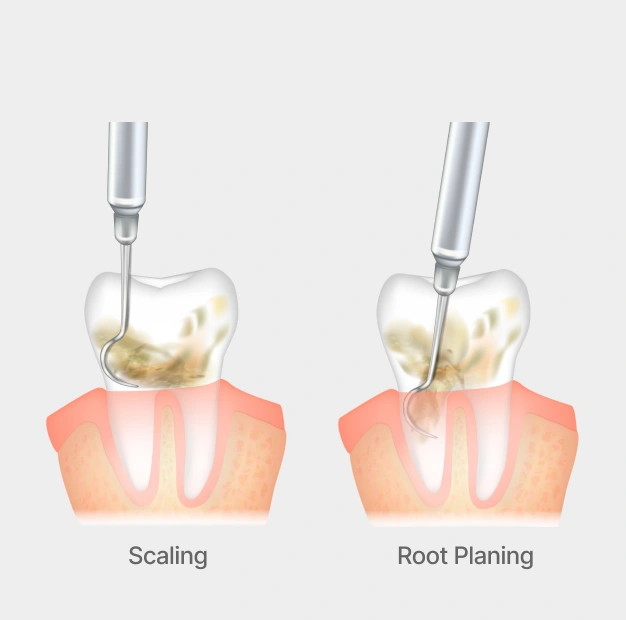
Scaling and root planing is a two-part procedure to treat periodontitis. The scaling portion is when Dr. Brittain removes all of the plaque and tartar above and below the gumline, cleaning all the way down to the bottom of the pocket.
Dr. Brittain then begins the second phase of treatment, which is root planing. Root planing smooths out the roots of your teeth to help your gums re-attach to them, while keeping bacteria, plaque, and tartar from re-adhering underneath the gumline. The process may take more than one appointment to make sure that your teeth are clean and healthy.
How is Scaling and Root Planing Different From a Regular Cleaning
Many patients wonder why a routine cleaning is not enough to treat gum disease. The difference comes down to depth and purpose:
- A routine cleaning addresses plaque and tartar buildup on the surfaces of the teeth above the gum line, it is a preventive procedure designed to maintain already healthy gums.
- Scaling and root planing goes significantly deeper, removing hardened deposits from below the gum line all the way down to the base of the pocket where bacteria have taken hold.
- Routine cleanings do not smooth the root surfaces of the teeth, root planing does, which is essential for allowing the gum tissue to reattach and heal properly.
Aftercare Tips
When you see Dr. Brittain for followup treatments, he will want to check on the healing of your teeth and gums. In most cases, patients who had red or swollen gums find that the tenderness and bleeding from periodontitis is reduced or completely eliminated. If your gums respond well and remain stable, you won’t need any further treatment.
To schedule a consultation or to ask any questions about scaling and root planing, give us a call at 480-719-6994 or send us an email.
Frequently Asked Questions
What is scaling and root planing used for?
Scaling and root planing is a deep-cleaning procedure that treats gum disease by removing plaque and tartar from below the gumline and smoothing the tooth roots.Is scaling and root planing painful?
The procedure is generally comfortable because dentists use local anesthesia. Mild soreness or sensitivity may occur for a few days afterward.How long does scaling and root planing take?
Treatment is often completed over one to two visits, depending on the severity of gum disease and the number of affected areas.What should I expect after scaling and root planing?
You may notice reduced gum inflammation, improved breath, and some tooth sensitivity as your gums begin to heal and reattach to the teeth.How do I care for my teeth after scaling and root planing?
Maintain excellent oral hygiene by brushing twice daily, flossing, following your dentist’s instructions, using any prescribed mouth rinses, and attending regular dental checkups.Why do dentists recommend scaling and root planing?
Dentists recommend it to treat gum disease (periodontitis), reduce infection, and prevent tooth loss by eliminating bacteria trapped under the gums.