7449 East Osborn Road #4 Scottsdale, Arizona 85251

Losing a single tooth might not seem like a major concern, especially if it’s toward the back of your mouth. Many people continue with their daily routine, assuming one missing tooth won’t affect their oral health. However, even a single gap can gradually change the way you chew, speak, and how your remaining teeth fit together.
At Dentistry of Old Town Scottsdale, helping patients restore missing teeth before additional problems develop is an important part of maintaining long-term oral health. If you’ve recently searched for dental implants near me, you may be wondering whether replacing just one missing tooth with a dental implant is possible. In many cases, the answer is yes, and it remains one of the most reliable and natural-looking tooth replacement options available today.
Can One Missing Tooth Really Be Replaced?
Absolutely.
A single tooth dental implant is specifically designed to replace one missing tooth without affecting the healthy teeth next to it. Unlike a traditional dental bridge, which often requires reshaping neighboring teeth for support, a dental implant functions independently.
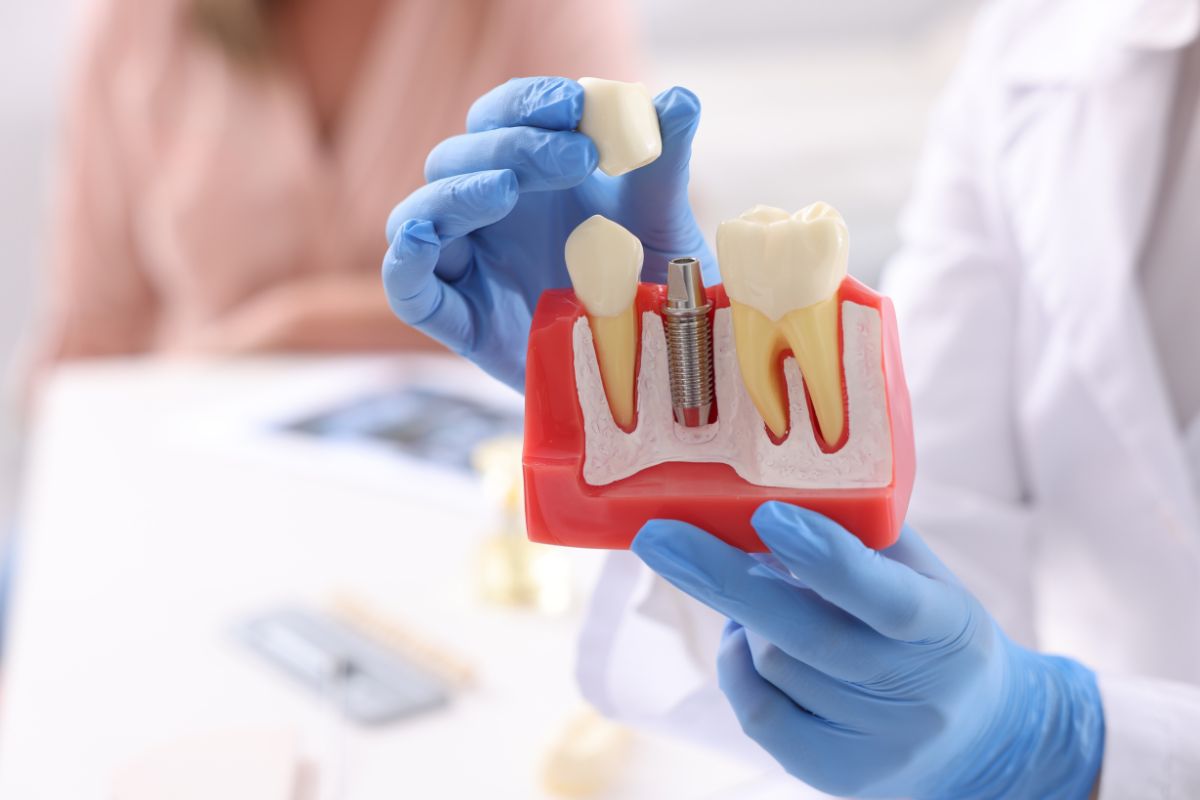
The replacement consists of three parts:
- A titanium implant placed into the jawbone
- An abutment that connects the implant to the restoration
- A custom-made dental crown designed to match your natural teeth
Together, these components create a replacement tooth that looks, feels, and functions much like a natural tooth.
Why Replacing One Missing Tooth Is Important
It’s easy to postpone treatment when only one tooth is missing, particularly if it isn’t visible when you smile. However, leaving the space untreated may lead to changes in your oral health over time.
Some potential concerns include:
Shifting Teeth
Teeth naturally rely on one another for support. When one tooth is missing, nearby teeth may gradually drift into the empty space, affecting your bite and making oral hygiene more difficult.
Jawbone Changes
Natural tooth roots stimulate the jawbone whenever you chew. After a tooth is lost, that stimulation disappears, which may lead to gradual bone loss in the area.
Changes in Bite Alignment
Even one missing tooth can alter how your upper and lower teeth come together. Over time, this may place uneven pressure on surrounding teeth and jaw joints.
Difficulty Chewing
Depending on the location of the missing tooth, everyday tasks such as chewing certain foods may become less comfortable or less efficient.
Replacing the tooth early may help reduce the risk of these long-term complications.
How Does a Single Tooth Dental Implant Work?
Dental implants are designed to replace both the visible portion of the tooth and the root beneath the gumline.
After the implant is placed, it gradually fuses with the surrounding jawbone through a natural process called osseointegration. Once healing is complete, a custom crown is securely attached to the implant.
This approach offers several advantages because it:
- Doesn’t rely on neighboring teeth for support
- Helps maintain jawbone health
- Provides excellent stability during chewing
- Looks natural alongside surrounding teeth
- Can provide long-lasting results with proper care
Many patients appreciate that the final restoration is fixed in place, eliminating the need to remove it for cleaning or sleeping.
Who Is a Good Candidate for a Single Tooth Dental Implant?
Many healthy adults with one missing tooth are good candidates for dental implant treatment.
During your consultation, your dentist will evaluate several factors, including:
Jawbone Health
Adequate bone is necessary to support the implant securely. If bone loss has occurred, additional treatment may be recommended before implant placement.
Healthy Gums
Healthy gum tissue helps create a stable environment for long-term implant success.
Overall Health
Certain medical conditions or lifestyle factors may influence healing. Your dentist will review your medical history to determine the most appropriate treatment plan.
Commitment to Oral Hygiene
Maintaining good oral hygiene and attending regular dental visits are important for protecting both your implant and your natural teeth.
If you’re exploring your tooth replacement options, visit our Dental Implants page to learn more about how implant treatment may help replace a missing tooth.
Are Dental Implants Better Than a Dental Bridge?
Both treatments can successfully replace a missing tooth, but they work in different ways.
A dental bridge relies on the neighboring teeth for support, while a dental implant replaces the missing tooth without altering adjacent healthy teeth.
The best option depends on several factors, including your oral health, jawbone condition, treatment goals, and personal preferences. A comprehensive evaluation can help determine which solution is most appropriate for your needs.
What Are the Benefits of Replacing One Missing Tooth With a Dental Implant?
Replacing a missing tooth is about more than filling a gap. A dental implant can help restore everyday function while supporting your long-term oral health.
Some of the key benefits include:
A Natural Look and Feel
Each implant crown is custom-made to blend with the color, shape, and size of your surrounding teeth, creating a seamless appearance.
Improved Chewing Ability
Because the implant is securely anchored in the jawbone, many patients can comfortably enjoy foods that may have been difficult to eat with a missing tooth.
Support for Jawbone Health
Unlike other tooth replacement options, dental implants stimulate the jawbone in a way that’s similar to a natural tooth root, helping reduce bone loss over time.
Protection for Nearby Teeth
Since an implant stands on its own, the healthy teeth next to the missing tooth don’t need to be reshaped for support.
Long-Term Durability
With good oral hygiene, regular dental visits, and proper care, dental implants can provide a reliable, long-lasting tooth replacement solution.
What to Expect During the Dental Implant Process
Knowing what the process involves can help you feel more confident about treatment.
Although every patient’s treatment plan is different, the process generally includes:
Comprehensive Consultation
Your dentist will examine your teeth, gums, and jawbone using digital imaging to determine whether a dental implant is the right option for you.
Implant Placement
The implant is carefully placed into the jawbone during a planned procedure. As the area heals, the implant gradually integrates with the surrounding bone.
Healing Period
Healing times vary from patient to patient. During this stage, the implant becomes securely anchored, creating a stable foundation for the final restoration.
Custom Crown Placement
Once healing is complete, a custom-made dental crown is attached to the implant, restoring both function and appearance.
How Long Does a Single Tooth Dental Implant Last?
Dental implants are designed to be a long-term solution for missing teeth.
While the implant itself can last for many years, its longevity depends on factors such as:
- Daily oral hygiene habits
- Routine dental checkups
- Overall health
- Avoiding tobacco products
- Managing conditions such as gum disease
Taking care of your implant is much like caring for your natural teeth. Brushing, flossing, and professional cleanings all play an important role in maintaining long-term results.
Myth vs. Fact
Myth: Replacing one missing tooth isn’t necessary.
Fact: Even one missing tooth can affect your bite, jawbone health, and the position of neighboring teeth over time.
Myth: A dental implant looks different from natural teeth.
Fact: Modern implant crowns are custom-designed to match your surrounding teeth, making them difficult to distinguish from your natural teeth.
Myth: Anyone with a missing tooth can automatically get a dental implant.
Fact: Candidacy depends on several factors, including your oral health, jawbone condition, and overall health. A professional evaluation is the best way to determine whether implant treatment is right for you.
Don’t Ignore a Missing Tooth
Replacing a missing tooth sooner rather than later may help preserve jawbone health, maintain proper bite alignment, and prevent neighboring teeth from shifting. A comprehensive evaluation can determine whether a single tooth dental implant is the right option based on your individual needs and treatment goals.
Schedule Your Consultation
If you’re considering replacing a missing tooth, a personalized consultation is the best place to start. Our team can evaluate your oral health, discuss your treatment options, and answer any questions you may have about dental implants.
To schedule an appointment, call (480) 719-6994 or request a consultation through our website.
Frequently Asked Questions
1. Can one missing tooth really be replaced with a dental implant?
Yes. A single tooth dental implant is specifically designed to replace one missing tooth without affecting the healthy teeth on either side of the gap.
2. Is a dental implant better than a bridge for one missing tooth?
Both options can be effective, but dental implants preserve neighboring teeth and help support the jawbone. The right choice depends on your oral health and treatment goals.
3. How long does it take to get a single tooth dental implant?
Treatment timelines vary depending on your oral health and healing process. Your dentist will explain what to expect after evaluating your specific situation.
4. Will the implant look like my natural teeth?
Yes. The dental crown is custom-made to match the size, shape, and color of your surrounding teeth for a natural-looking result.
5. What happens if I don’t replace a missing tooth?
Leaving a missing tooth untreated may lead to shifting teeth, bite changes, jawbone loss, and difficulty chewing over time.